

What Are Approach Shoes? And Do You Need a Pair?
Quick answer: Approach shoes are a hybrid of hiking and climbing shoes. They have a durable, protective upper and a hiking-shoe fit, but use sticky climbing rubber and a stiffer sole so you can scramble on rock on the way to a climb. They are ideal for outdoor climbers and scramblers, but most hikers will be more comfortable in regular hiking shoes or trail runners.
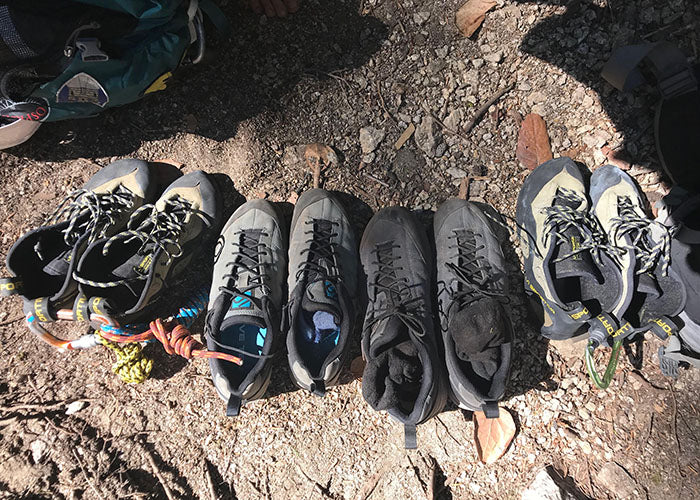
Working the floor at Next Adventure, I get the same question again and again: "Are these hiking shoes?" I look up to see someone holding a pair of approach shoes. "Yes and no, kind of. They're approach shoes," I answer. "What are approach shoes?" they ask. Here is the answer.
What Is an Approach Shoe?
Approach shoes are a hybrid of hiking and climbing shoes. They are made for the approach: the hike and scramble up to the start of a rock climbing area. That means they need to handle both the forest floor and slippery rock, so they are useful on every part of the approach.
The upper: like a hiking shoe
Approach shoe uppers are built like hiking shoes. They are durable, sometimes water repellent, and protect and support the top of your foot. They also fit like hiking shoes. Unlike climbing shoes, they are not meant to be tight with your toes curled at the end, and you wear them with socks. Your foot lies flat and comfortable, just like in a hiking shoe.
The sole: like a climbing shoe
The bottom of an approach shoe is where it borrows from climbing shoes. It uses the same kind of sticky rubber, which grips rock so you can scramble or even do easy climbs with confidence. If you have ever tried to climb in running or hiking shoes, you know it is not easy: those soles use harder rubber made for normal ground, and it tends to slip on rock.
Approach shoe soles are also much more rigid than hiking shoes. That stiffness helps on steep rock scrambles and easy climbing, but makes them less comfortable for long-distance hiking.

Who Should Get Approach Shoes?
That depends. Approach shoes are usually owned by outdoor climbers who need sticky rubber and a hiking-style upper to reach the crag. Climbing in Squamish, I found my approach shoes almost essential: many approaches involved scaling steep rock with a fixed line or chain, and without them I likely would have slipped. Other times they have been less essential but still very helpful, like on rock scrambles on the way to a climb. I have even used them on low-grade climbs when I did not feel like jamming my feet into climbing shoes.
Should You Get Approach Shoes for Everyday Hiking?
Probably not. Because of their stiff soles, they are not as comfortable as regular hiking boots, especially on long hikes. Hiking boots and trail runners are usually more comfortable and dry faster if they get wet. But if your hikes look more like Class 4 rock scrambles, approach shoes might be the right choice after all.
- Oboz Sawtooth X Low B-Dry (Women's) Low hiker for regular trails
- Oboz Katabatic LT Mid GTX (Men's) Waterproof mid hiker
- Topo Pursuit 3 (Men's) Trail runner for long days
- Butora Gomi Wide Fit Climbing shoe for when you reach the wall
- Kavu Rope Bag Carry your rope to the crag
What to Look for in an Approach Shoe
Try them on. Almost every item in the store has features we love to nerd out on, but approach shoes are one of those products where fit matters more than anything. A properly fitting pair serves you well, while a poor fit causes discomfort and pain. No single approach shoe fits everyone, so the best way to find yours is to try a few and see how they fit your foot.
Approach shoes are purpose-built for getting to the climb. They combine the comfort and protection of a hiking shoe with the sticky rubber and rigidity of a climbing shoe, making them a great asset for outdoor climbers. Approach shoes are available in-store at our Grand Avenue store in Portland's Central Eastside, where our staff can help you compare fit.
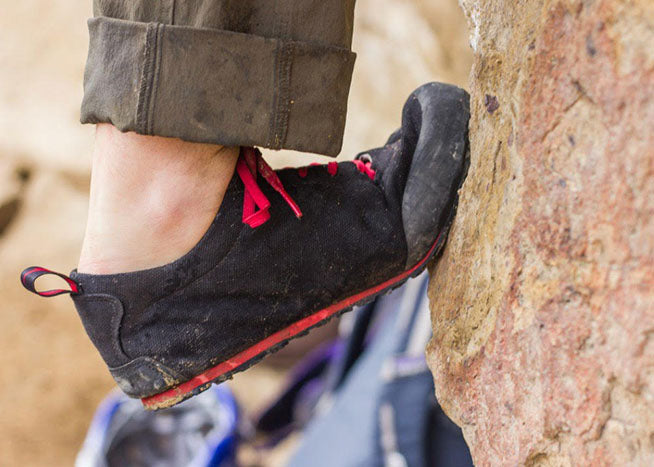
Evolv Cruzer Psyche. Photo courtesy of Reuben Schafir.
Approach Shoes FAQ
What is the difference between approach shoes and hiking shoes?
Approach shoes use sticky climbing rubber and stiffer soles for grip on rock, while hiking shoes use harder, more durable rubber and more flexible, cushioned soles for comfort over long distances on dirt trails.
Can you climb in approach shoes?
Yes, on easy terrain. Sticky rubber and rigid soles let you scramble and do low-grade climbs, though they will not perform like a dedicated climbing shoe on harder routes.
Are approach shoes good for long hikes?
Usually not. Their stiff soles are less comfortable over many miles, so hiking boots or trail runners are better for long trail days without much rock.
How should approach shoes fit?
Like a hiking shoe: snug and secure with socks, toes lying flat rather than curled like in a climbing shoe. Try several brands since fit varies a lot.