

Hiking With Your Dog: How to Start, Safety Tips, and Gear
Quick answer: Start your dog on short, easy hikes and build up gradually, keeping your dog's age and size in mind and checking with your vet. Practice recall and "leave it," follow leash rules, and bring water, a collapsible bowl, snacks, waste bags, and a dog first aid kit. A durable collar, a harness with a handle, and paw protection make trail days safer and more comfortable.
If you are like me, you look forward to longer days filled with outdoor adventures with your dog. Whether you are just starting out or looking for a refresher, this guide will help you and your pup get ready for a day on the trail.
Training and Conditioning
Like people, dogs need conditioning. Start with shorter, easier hikes so your dog gets comfortable with new terrain, and use that time to reinforce trail manners. Commands like "leave it" and a reliable recall help keep your dog, other hikers, and wildlife safe. Follow the leash rules for each trail; they are there for your dog's safety too.
Consider your dog's size and age when planning outings. For puppies, a common rule of thumb is about 5 minutes of structured exercise per month of age until they are fully grown, which is around 12 months for smaller breeds and 18 months or more for larger breeds. Talk with your vet about what is right for your dog.
Gear Recommendations
I am a strong advocate for not overconsuming. To be outdoorsy, all you really need to do is go outside. That said, quality gear made for the outdoors can make adventures easier for you and your pup.
Leash
A multi-function leash that can be worn around your waist is great for trail running and hands-free hiking. An adjustable length lets you keep your dog close on busy trails and give more room on quiet ones, and a clip or attachment point is handy for a waste bag holder.
Collar
Our everyday collar, the Ruffwear Front Range Collar, doubles as a great trail collar. It has strong, durable webbing, separate attachment points for the leash and ID tags, and a tag silencer that makes for a much quieter day on the trail.
Harness
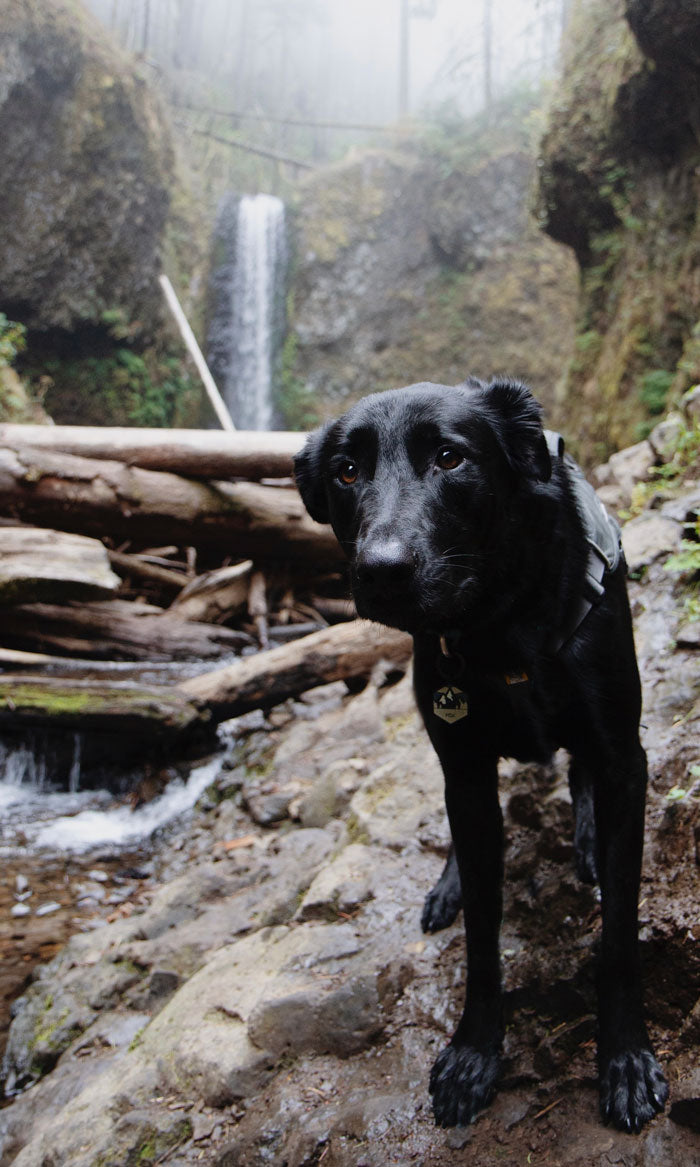
Look for a harness that allows full range of motion for running and jumping, with a handle so you can help your dog over obstacles and multiple adjustment points for a secure fit. A second attachment point is useful for a safety light on early morning or late evening hikes.
Dog packs
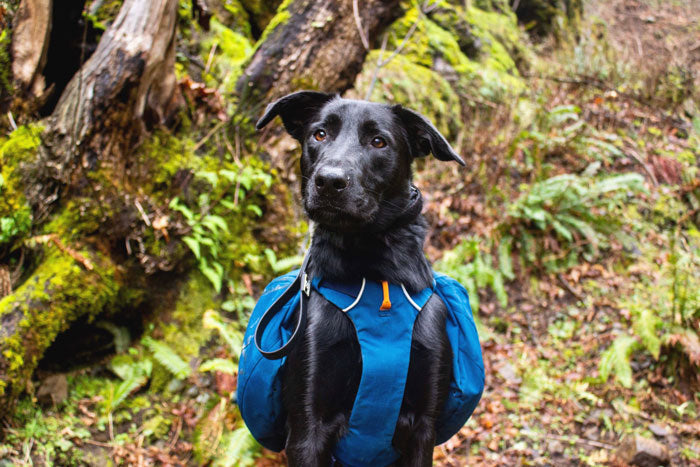
For longer trails or overnights, a dog pack lets your pup carry some of their own gear. Get your dog comfortable with it gradually: have them wear it empty on walks or around the house, then slowly add weight over time. Most guidance suggests a fit adult dog can carry somewhere around 10 to 25 percent of their body weight; start at the low end and ask your vet what is appropriate for your dog.
Paw protection
Paw balm or booties protect your dog's feet from rough or hot terrain. Balm is great before and after hikes to soothe dry pads, while booties protect paws on the trail.
- Ruffwear Front Range Collar Durable everyday and trail collar
- Ruffwear Front Range Harness Comfortable trail harness
- Ruffwear Palisades Pack Dog pack for longer trips
- Ruffwear Front Range Day Pack Lighter dog pack for day hikes
- Ruffwear Summit Trex Shoes Protect paws on rough terrain
- Ruffwear Trail Runner Belt Hands-free running and hiking
- Ruffwear Vert Insulated Vest Warmth for cold, wet days
Safety and Preparation
Dog first aid kit
Put together a first aid kit with the essentials for trail injuries: tweezers, wound care supplies, and sprain care. Some owners also carry an antihistamine, but talk with your vet about whether and how much to give. Better to be over-prepared than under.
Heat safety
On warm days, a cooling collar or vest can help keep your dog comfortable. Learn the signs of heatstroke, such as heavy panting, drooling, weakness, or stumbling, and know how to cool your dog down with shade and water right away.
Food and water
Your dog needs energy and hydration too. Pack high-calorie treats, plenty of water, and a collapsible bowl, especially on trails without water sources.
- Ruffwear Stash Bag Mini Carry treats and waste bags
- Surviveware Small Premium First Aid Kit Base for a dog-and-human kit
Be Respectful on the Trail
- Leave no trace. Dog waste can harm the environment you are hiking in. Pack it out rather than leaving bags trailside to grab later.
- Stay on trail. Do not let your dog wander off trail or disturb wildlife.
- Check the rules. Not every trail allows dogs. The USDA Forest Service and trail apps are good resources for checking whether a trail is dog friendly.
Most of all, have fun and do not stress too much. Hiking with your dog should be an exciting and enjoyable time for both of you. Stop by our Grand Avenue store in Portland's Central Eastside to get your pup fitted for a harness or pack.
Hiking With Dogs FAQ
How far can my dog hike?
It depends on age, breed, and fitness. Start with short, easy hikes and increase distance gradually, watching for signs of fatigue. Puppies and senior dogs need shorter outings; ask your vet for guidance.
How much weight can a dog carry in a pack?
Many sources suggest a fit adult dog can carry roughly 10 to 25 percent of body weight. Start light, build up slowly, and check with your vet first.
What should be in a dog first aid kit?
Tweezers, wound care supplies, bandaging, and sprain care are a good start. Ask your vet before adding any medication such as an antihistamine.
Do dogs need booties for hiking?
Not always, but booties help on rough rock, hot surfaces, snow, and ice, or for dogs with sensitive paws. Paw balm before and after hikes also helps protect pads.

Six of Oregon's Best Rock Climbing Areas (Plus Routes Not to Miss)
Quick answer: Oregon's best rock climbing starts at Smith Rock, the birthplace of American sport climbing, but don't ...
Read More
Video: How to Get Into a Kayak
Quick answer: To get into a kayak from a dock, set the kayak in the water parallel to the dock, sit on the dock besid...
Read More
Staff Pick: Therm-a-Rest Parsec 20F UL Sleeping Bag Review
Quick take: One of our staff carried the Therm-a-Rest Parsec 20F UL for 150 days on the Continental Divide from Mexic...
Read More